Silicon-based photovoltaic panels have been on the market for a long time. However, this commercial longevity should not mask the profound changes they have undergone. From cell types and unit power to shape, connections, and efficiency, today's panels bear little resemblance to those of the past.

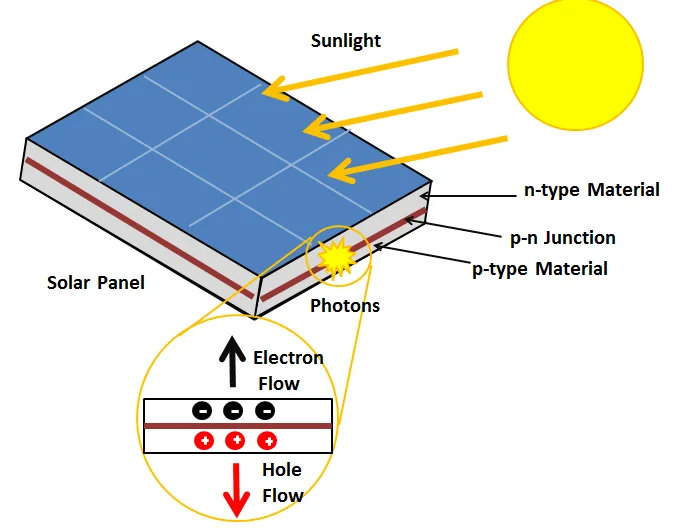
At the heart of a photovoltaic panel are cells made of a semiconductor material, most often silicon, organized into two layers: a p-type (positive) layer and an n-type (negative) layer. At their interface, an electric field is created that forces electrons excited by light to flow, generating a direct current that can be used to charge a battery.
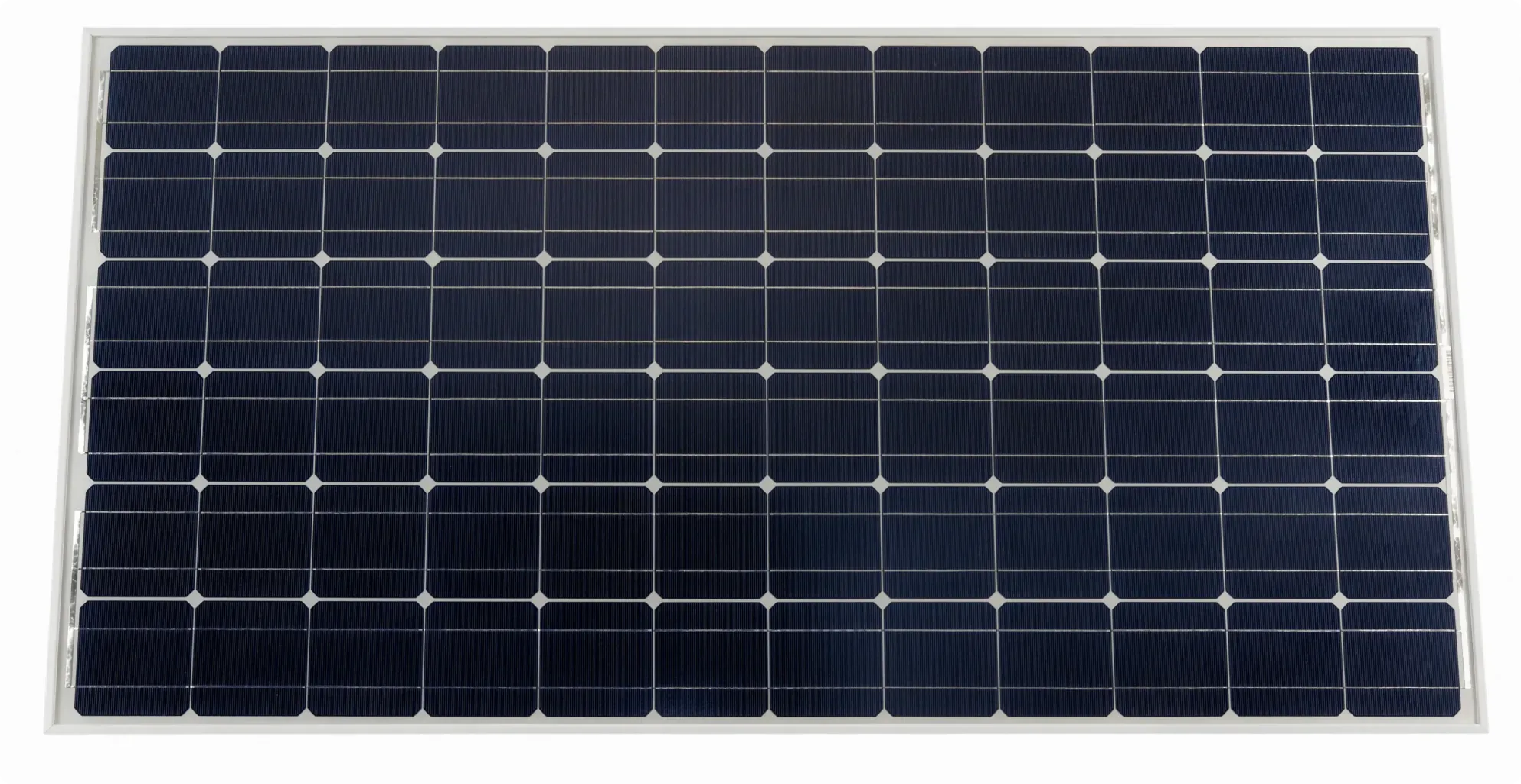
Most current panels use monocrystalline cells, recognizable by their uniform dark color and often beveled corners. This type of cell offers excellent efficiency, frequently exceeding 22%, which allows for more energy production in a small area—ideal for a boat roof.
For example, four 200 Wp monocrystalline panels are sufficient to power the comfort systems of a pleasure craft, via batteries and a properly sized MPPT charger.

Recent versions of these panels use the same foundations but feature "split-cells": each cell is cut into two, three, or four parts and wired in parallel. Each sub-cell provides less current but with reduced internal resistance, which improves overall efficiency by about 3 to 4% compared to a standard panel, with values reaching up to 24% on the best modules.
Coupled with PERC (Passivated Emitter and Rear Cell) technology, these cells benefit from a rear layer that reflects some of the light back into the cell for a second pass and limits heat buildup, maintaining good performance even in hot weather or when the orientation is not ideal (North, West, etc.).
Polycrystalline panels are made of several aggregated silicon crystals, which reduces their cost but also slightly lowers their efficiency (about 18 to 20%). They remain a good choice for installations where available space is not critical and where budget takes precedence over maximum performance.
Conversely, organic photovoltaic (OPV) cells are based on carbon polymers that can be printed on glass, flexible films, or even concrete. While they offer great freedom of shape, their efficiency is lower, around 8 to 10%. These technologies remain marginal, as classic silicon panels remain the gold standard for DIY enthusiasts seeking reliability and longevity.
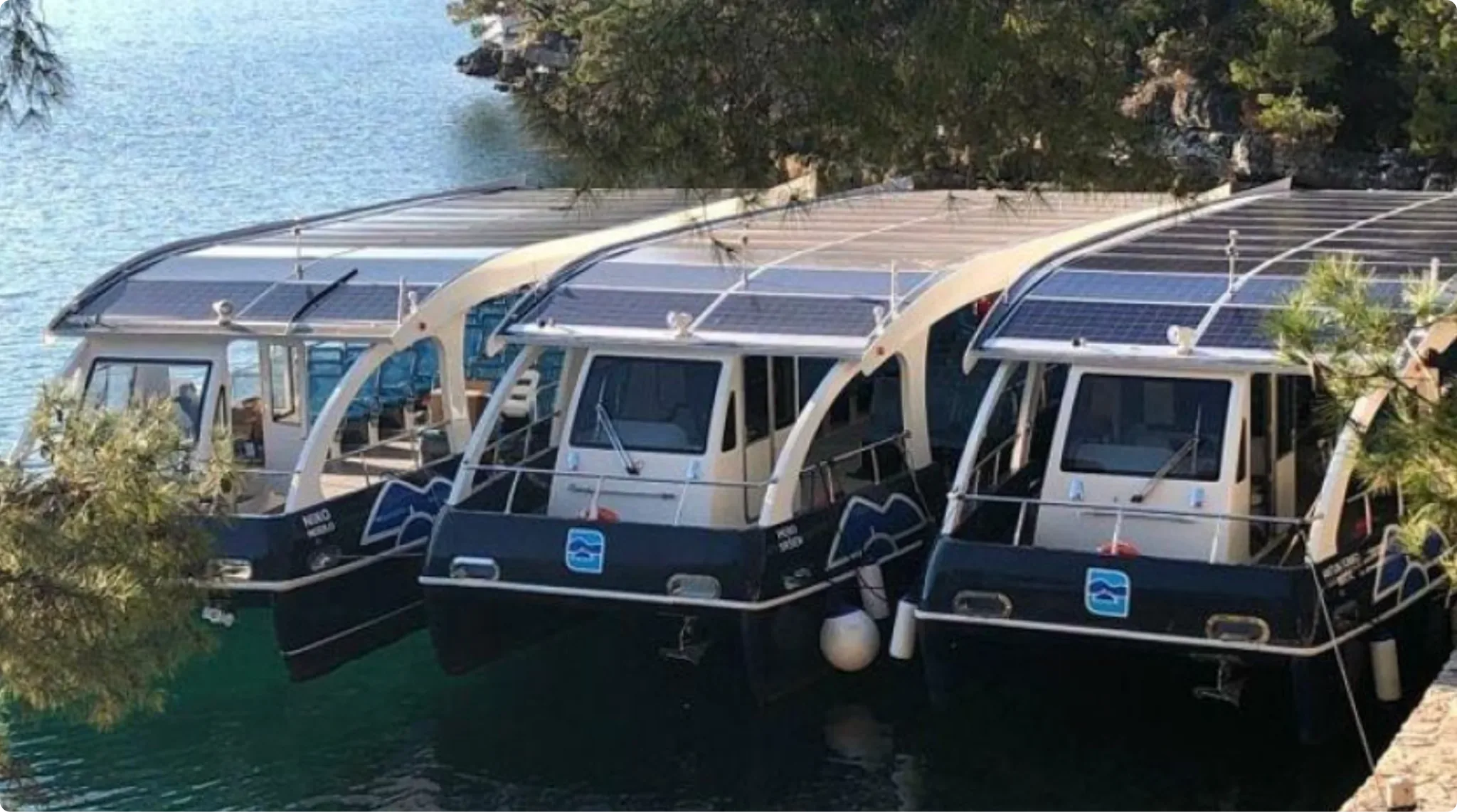
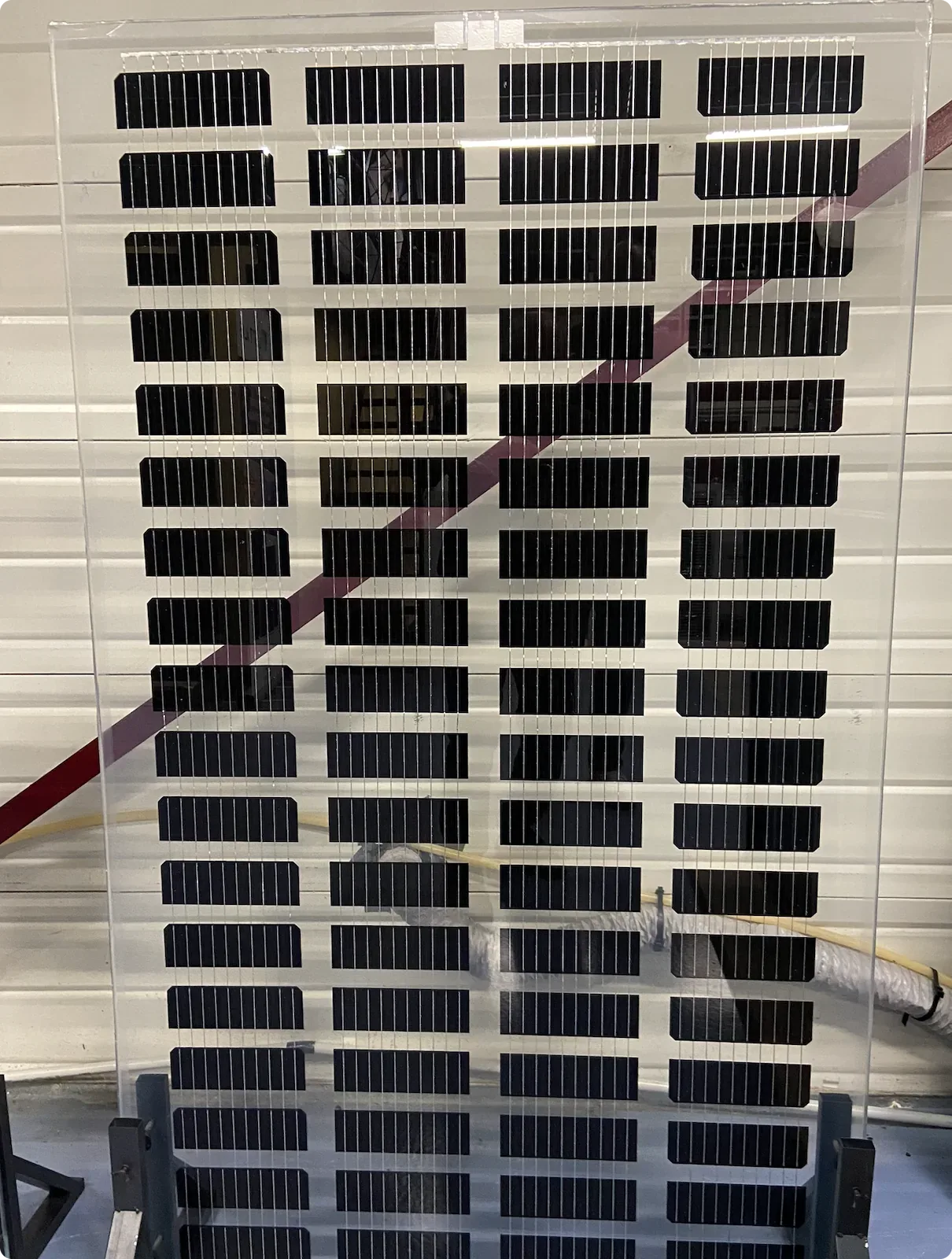
Bifacial panels capture light on both sides: the front side receives direct sunlight, while the back side collects light reflected from the ground or water. Generally using monocrystalline split-cells sandwiched between two panes of glass, they achieve efficiencies in the 22 to 25% range, and are especially effective on highly reflective surfaces (snow, light-colored ground, or a boat deck with white gelcoat).
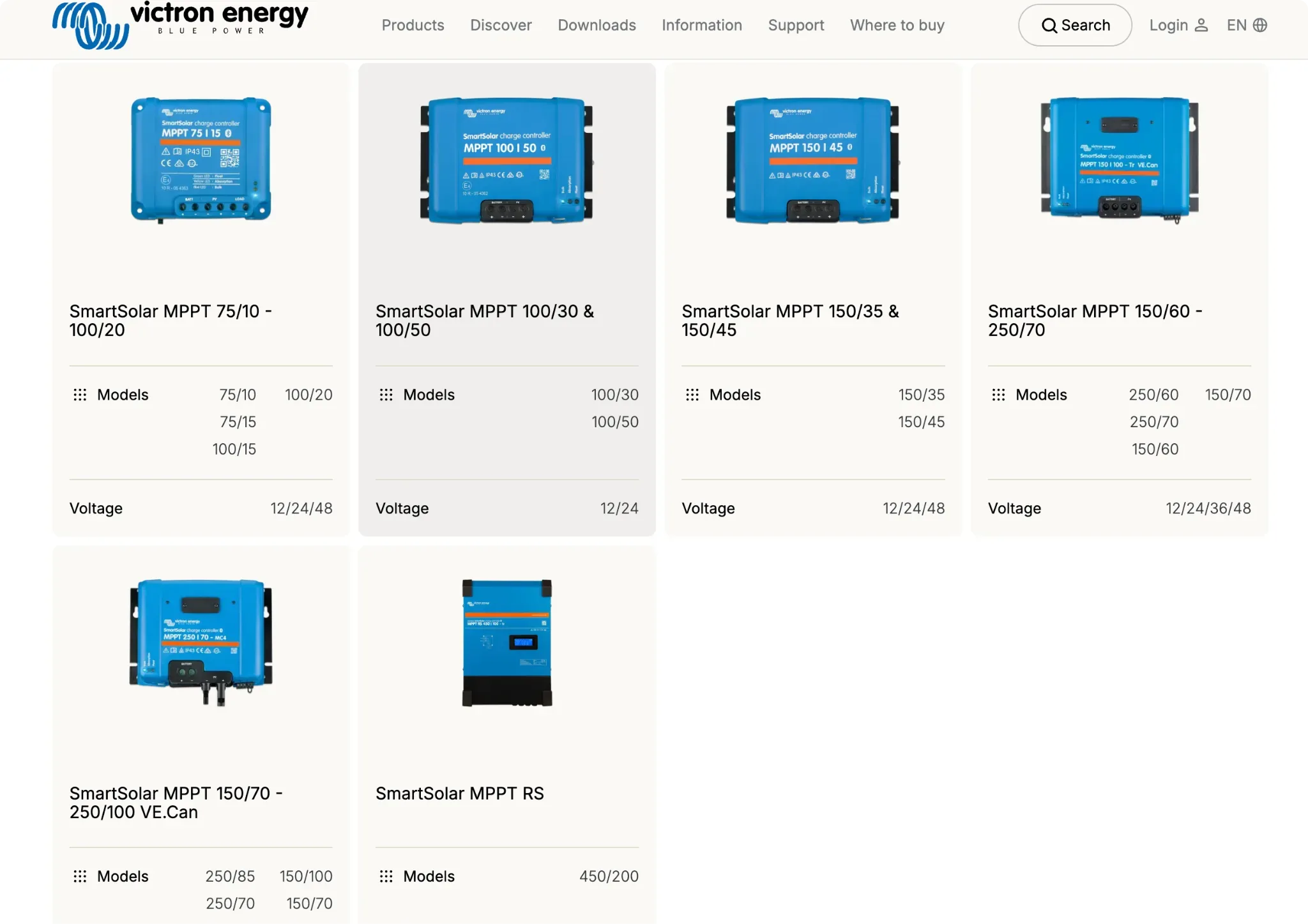
To make the most of these panels, an MPPT or PWM solar charger is essential, as it constantly adapts the available power to the battery and manages rapid changes in sunlight. On a catamaran equipped with bifacial panels, one or more SmartSolar MPPT controllers (e.g., 150/35 or 250/60) ensure optimal charging of the battery bank, even when light levels fluctuate due to clouds or sea reflections.
Start by performing an electrical load analysis to determine the required battery capacity and charging methods (MPPT, generator, alternators, shore power, etc.).
Then, choose high-efficiency monocrystalline panels (or equivalent), or opt for split-cell or PERC versions that offer extra performance within the same footprint.
Reserve bifacial panels, which are more expensive, for situations where you can take advantage of ground reflection (white paint, light-colored surfaces, or snow).
Pair these panels with an MPPT controller properly sized for the entire array.
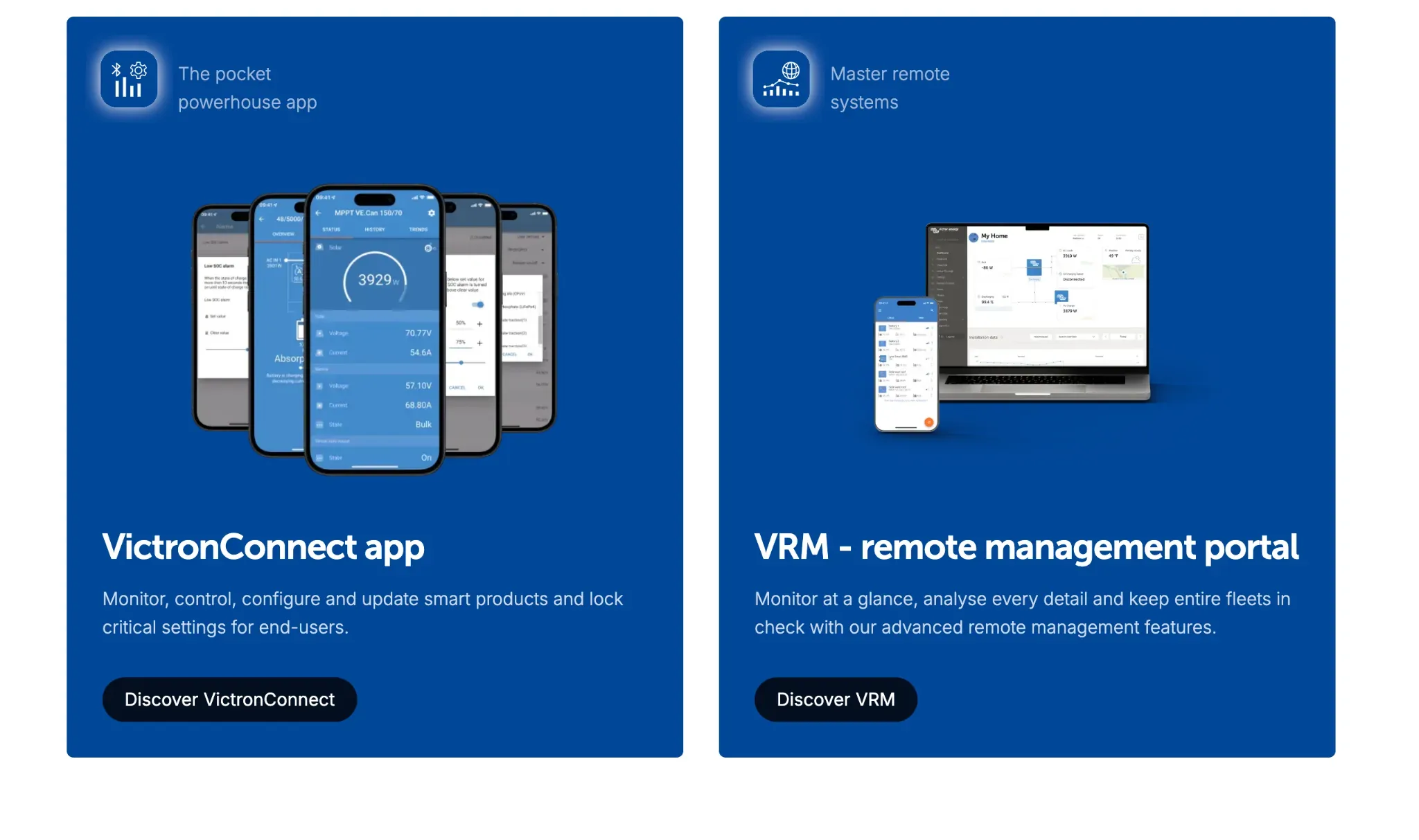
Finally, do not overlook the importance of using a monitoring tool. Victron Energy is a leader in this field with a complete range of GX communication devices that synchronize your Victron Energy equipment and allow you to access data locally via a dedicated screen, an MFD, or a smartphone (using VictronConnect), or on any computer screen if the GX device is connected to the internet (via Victron VRM).
Author: François Meyer
