Hydrogen propulsion: it shouldn't be compared to a type of engine, but rather to a propulsion principle.
In fact, hydrogen systems are hybrid installations with electric motors, powered by hydrogen fuel cells.
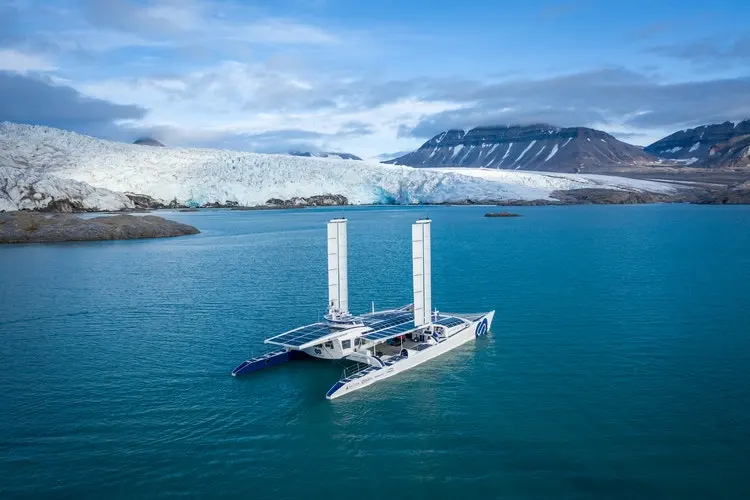
Electric motors offer high torque and excellent efficiency, even at low speeds. If you compare a diesel engine to an electric one, the electric motor produces the same thrust effects as a diesel, even though the diesel engine has nearly twice the power.
When we talk about hydrogen propulsion, we are actually referring to hydrogen-electric hybrid propulsion.
On a boat, a hybrid electric propulsion system consists of one or more electric motors powered by batteries, which are in turn recharged by a generator.
This generator can be a diesel unit or, in a hydrogen hybrid system, a hydrogen fuel cell.
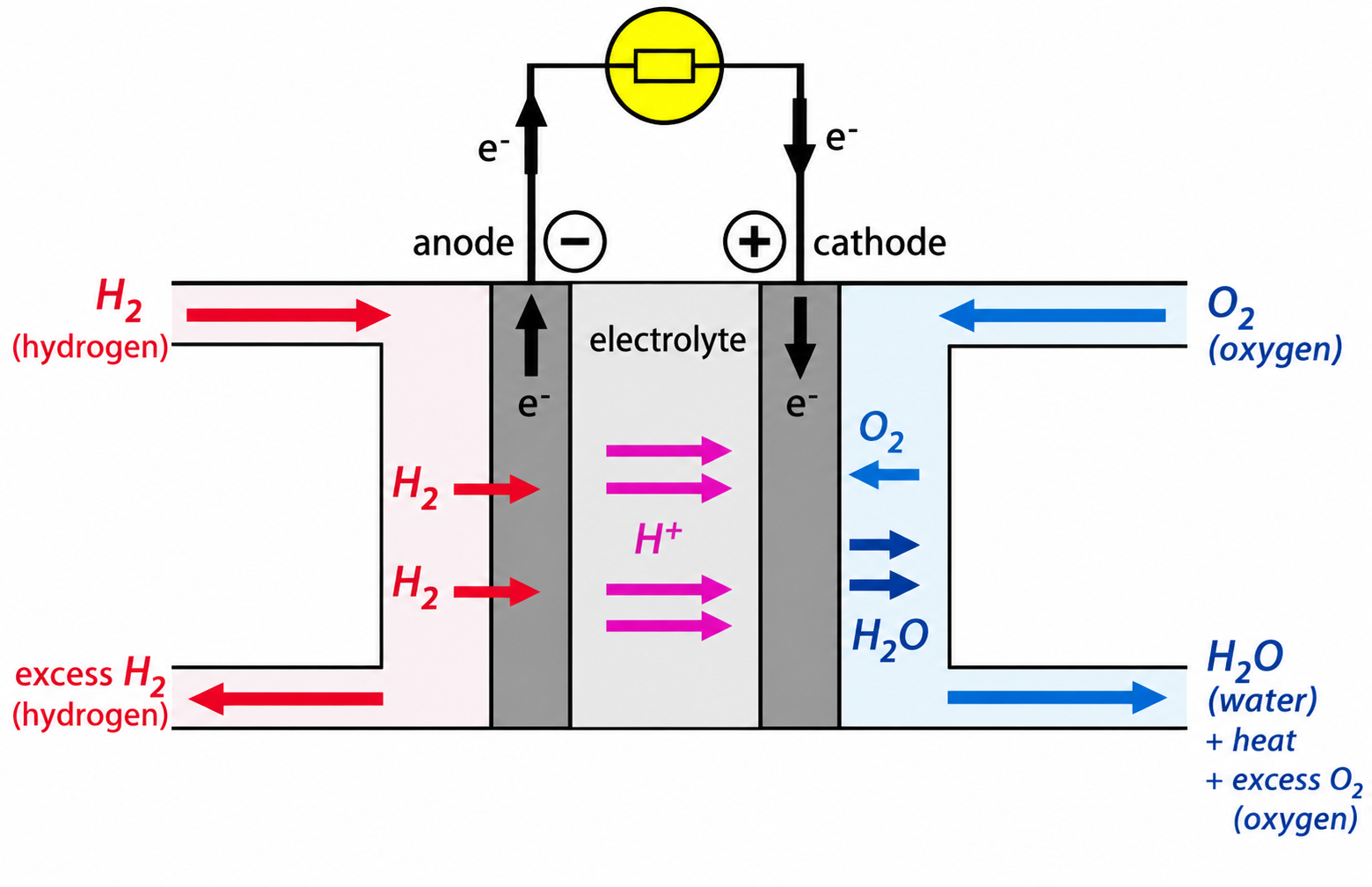
The fuel cell works like a battery that is constantly supplied with fuel.
This cell harnesses the energy generated by redox reactions within a housing. The oxidation of a reducing fuel at one electrode, coupled with the reduction of an oxidizing fuel at the other, creates a voltage between the two and generates an electric current.
To operate, these cells require fuel, and those of interest to the nautical industry run on hydrogen.
These systems can be supplied from shore by filling their tanks or, in the most advanced systems, by producing their own hydrogen.
Hydrogen can indeed be produced from seawater using an osmosis unit (for purification) followed by an electrolyzer, which converts water (H2O) into hydrogen (H2).
However, this electrolysis reaction requires electricity, which must be produced by means other than the fuel cell powered by the electrolyzer's output!

In response to the Calanques National Park's mandate that only clean vessels be permitted for commercial use, a tourist transport operator in the Calanques designed a 40-foot boat powered by a fuel cell. That boat is theHynova 40.
This 80 kW hydrogen fuel cell powers 132 kWh of lithium batteries and drives two 184 kW electric motors. At low speeds, the fuel cell powers the boat on its own, while at higher speeds, the batteries provide a boost. The boat carries 23 kg of liquid hydrogen at 350 bar and makes round trips between Marseille and Cassis. It charges at the dock every evening, and hydrogen refueling is also done dockside.
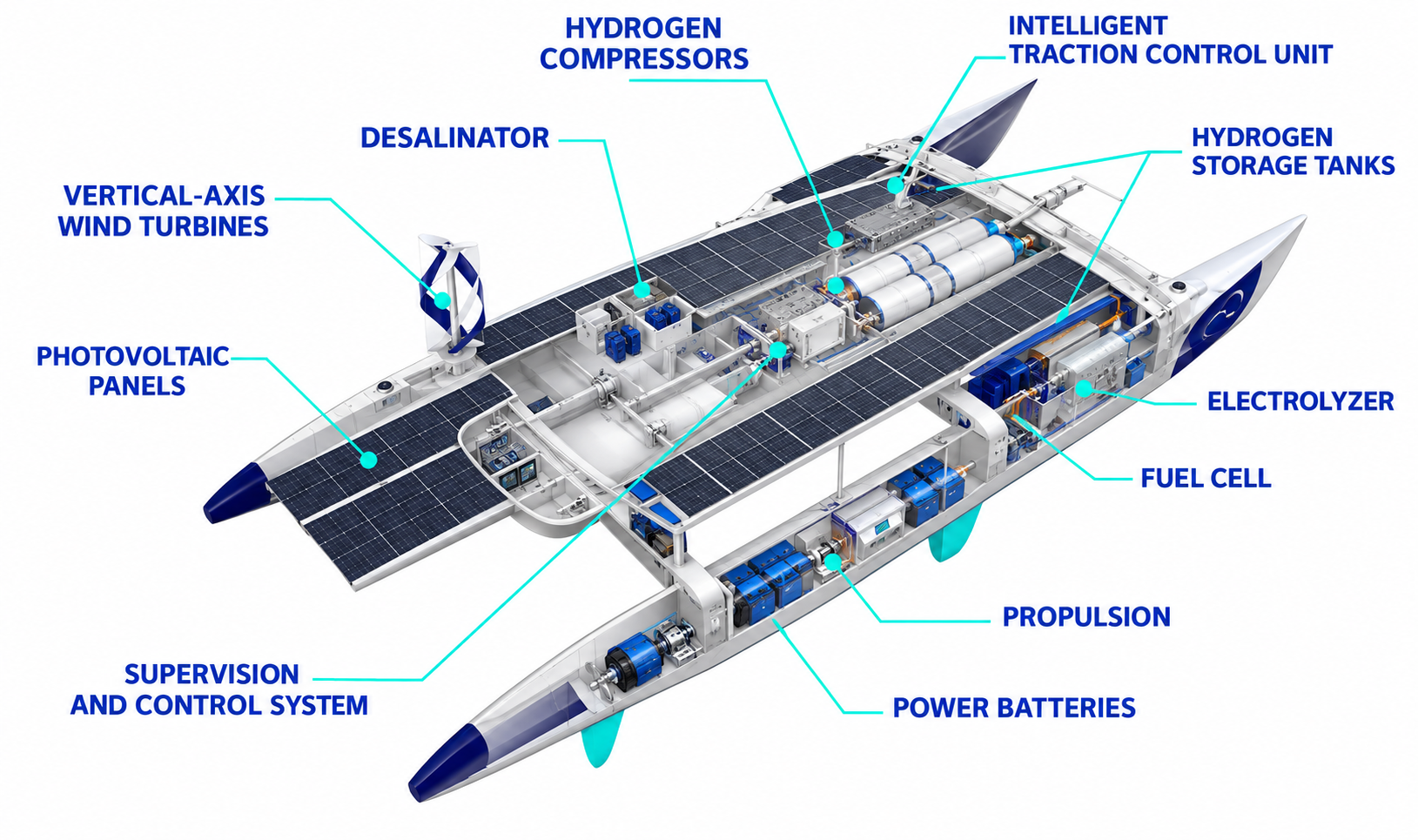
On Energy Observer, we find the same basic configuration, but since the boat is designed for long-distance travel, it synthesizes its own hydrogen, which it stores in pressurized tanks.
To do this, it uses photovoltaic panels and powerful wind turbines capable of producing the electrical energy needed to cover the consumption of onboard services and the electrolysis system, which produces the hydrogen required for propulsion from seawater.
While docked, Energy Observer uses shore power to run its electrolyzer and fill its tanks.
However, caution is required, as large-scale hydrogen production and storage are not without their challenges.
Because it is flammable and explosive, the "hydrogen gas station" model carries risks, which ensures a bright future for systems capable of producing their own fuel on a small scale.
