Jibing is a very practical maneuver, but it can be tricky or even dangerous. However, with the right method, everything goes smoothly: follow the guide!
Many nautical terms are used in this article. Remember, all sailing vocabulary is explained in simple language in each of our videos. You can learn it bit by bit and review it whenever you like.
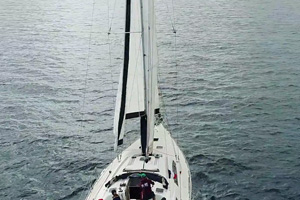

Jibing is performed when we are sailing downwind and want to change tack without heading into the wind. In other words, we want to change course so that the wind comes from the side opposite to our current side.
In plain English: the wind is coming from my rear left, and I want to change course. This will mean the wind will come from the rear right after the maneuver.

Tacking also allows you to change tack. But in this case, the wind doesn't come from behind, but from the front. The maneuver is therefore performed while heading into the wind. You will understand that it is easier to master, especially in strong winds, but it also requires a much longer maneuver that would additionally require dousing the spinnaker…
So, you might as well master the jibe!

When sailing downwind, the mainsail is fully extended to one side. The sailboat is pushed by the wind. If I change course enough to change tack, the mainsail will swing to the other side of the boat.
Without thought or anticipation, the boom will swing in a semi-circle to move from its initial position to its final one. This movement will occur at a speed proportional to the wind, and the forces involved will increase with the square of the speed. Watch out for damage! A crew member's head, the shrouds, the gooseneck (the fitting attaching the boom to the mast)—there is plenty of potential to break something or hurt someone!
