Have you ever spent a weekend away wondering whether your bilge pump was running, whether your batteries were holding up, or whether your boat was still exactly where you left it?
Remote monitoring was created for exactly that reason. In just a few years, it has evolved from a gadget reserved for superyachts into equipment that many owners of sailboats, catamarans, and powerboats now install as naturally as a VHF radio or a chartplotter.
In this article, we'll explore the different systems available, what they can do, and how to determine which one best suits your boat.
We'll finish with a closer look at the Victron approach, which has significantly changed the game in recent years for boats already equipped with solar panels and lithium batteries.
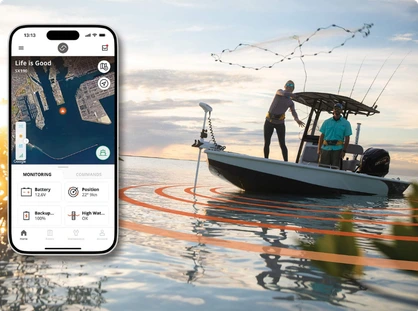
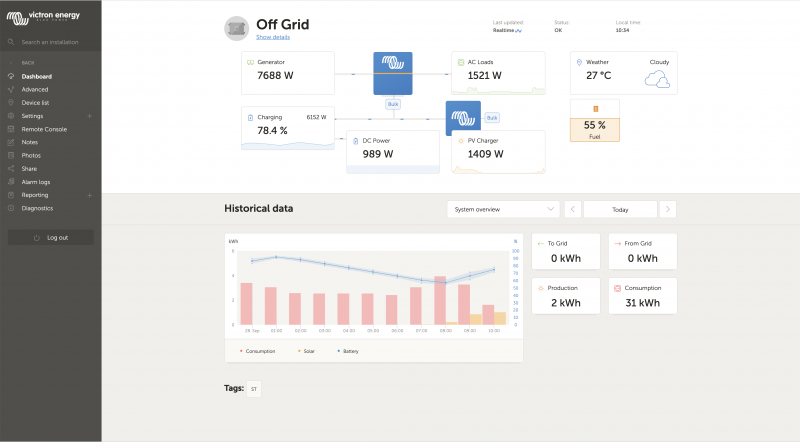
This is probably the most useful function on a day-to-day basis. A good monitoring system tells you at any moment the real condition of your battery bank: how much charge remains, how quickly it's being depleted, how much power your solar panels are producing, and whether your shore power charger is doing its job.
With Victron, the Cerbo GX collects this information directly from connected devices such as the shunt, MPPT charge controller, inverter, and BMS. The data can then be viewed either on the onboard GX Touch display or remotely through the VRM portal from the comfort of your home.
Maretron offers a similar approach through the NMEA 2000 network, with the added benefit of fuel-range calculations that estimate how many nautical miles you can still travel. Simpler systems such as Siren Marine, Garmin OnDeck, or Vanemar typically provide battery voltage and shore power status, which is sufficient for most basic monitoring needs.
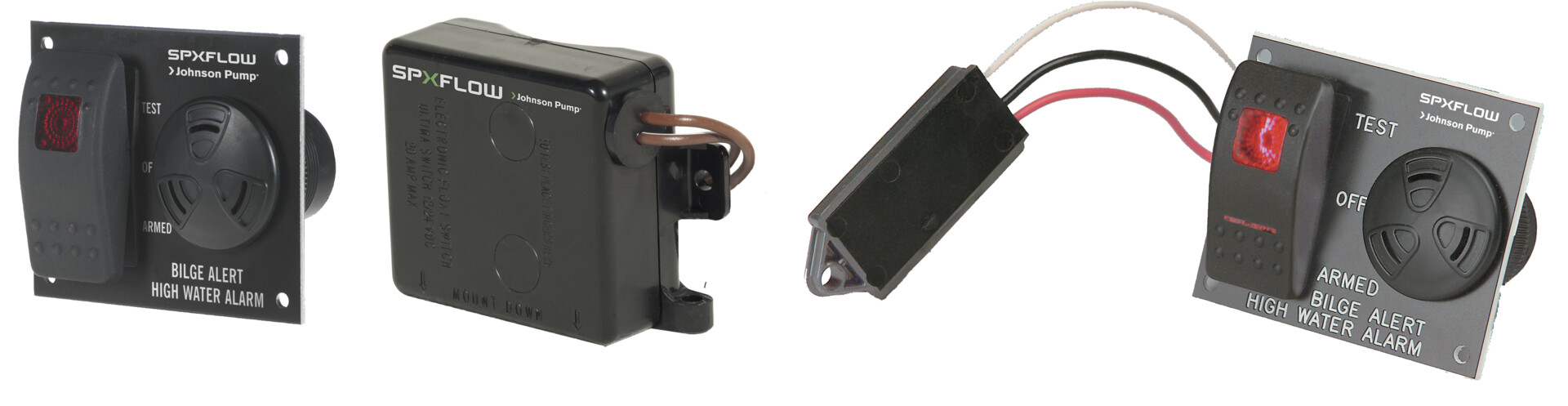
Most monitoring systems can detect when the bilge pump starts running. The real differences lie in whether a dedicated sensor is required and in the sophistication of the alerts.
Garmin OnDeck, for example, notifies you if the bilge pump has accumulated 45 minutes of operation within a 24-hour period—a typical sign of a small but persistent leak.
On the Victron side, the four digital inputs of the Cerbo GX can monitor not only the bilge pump but also smoke detectors, carbon monoxide alarms, and door contact switches.
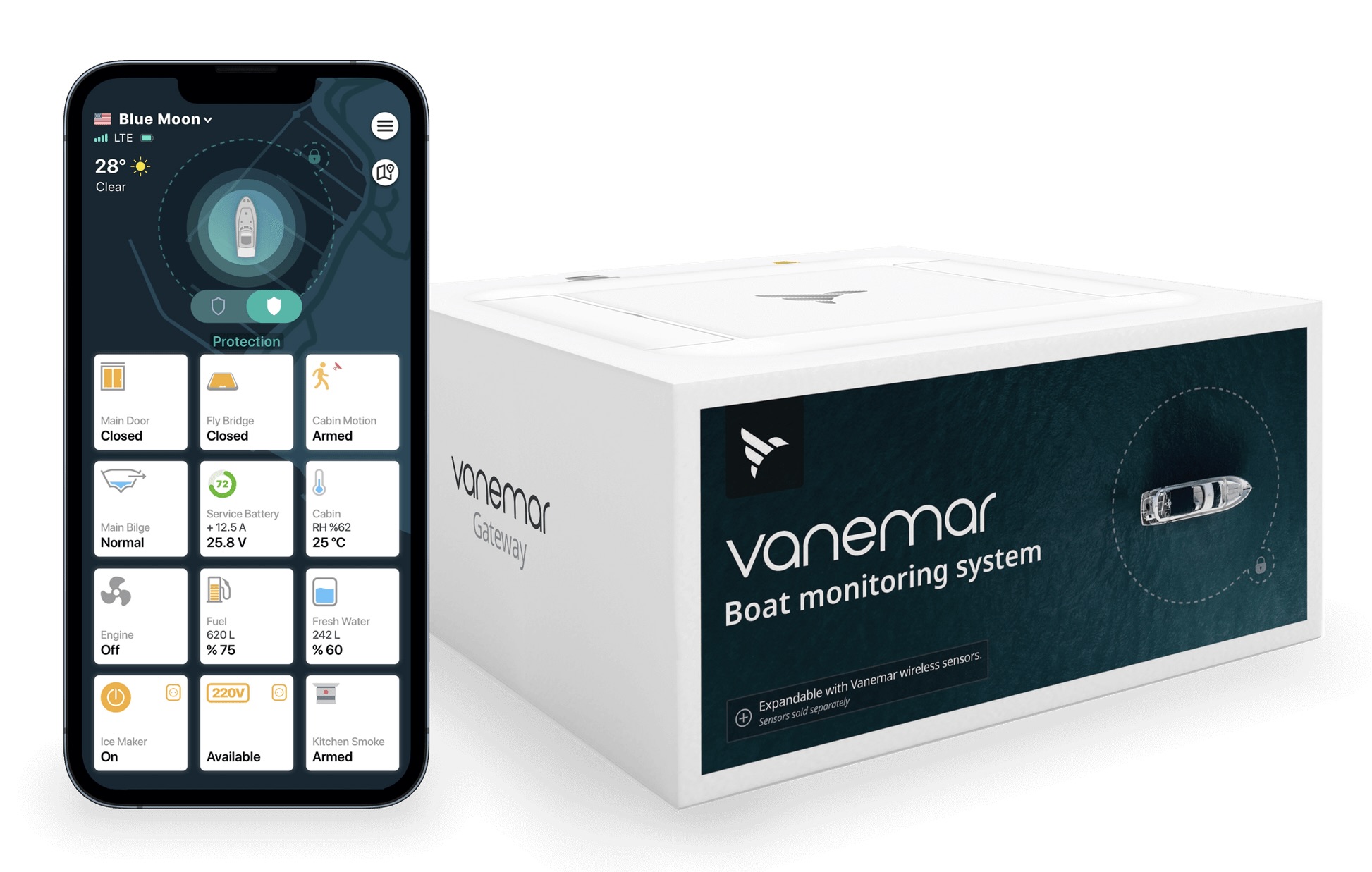
Wireless systems such as Vanemar and Sense4Boat use battery-powered ZigBee sensors that can be installed wherever needed, eliminating the need to run cables into difficult-to-reach areas such as the bilge. Some wireless sensors, including Ruuvi, Mopeka, and Safiery products, are also compatible with Victron Energy systems.

Geofencing is a virtual boundary that you draw around your marina slip or anchorage. If your boat leaves that designated area, you receive an alert.
Victron VRM allows you to create geofences manually using circles, rectangles, or custom shapes. It can also alert you if the GPS becomes disconnected, which may indicate a theft attempt.
Raymarine YachtSense Link includes a built-in GPS and offers similar functionality through its mobile application.
One limitation to keep in mind with Garmin OnDeck is that its minimum geofence radius is approximately 300 feet (90 meters), which is generally not precise enough to detect anchor dragging.
There are two main approaches to alerting.
Local alarms—such as sirens, buzzers, or flashing lights—activate directly on the boat and are useful when someone is nearby.
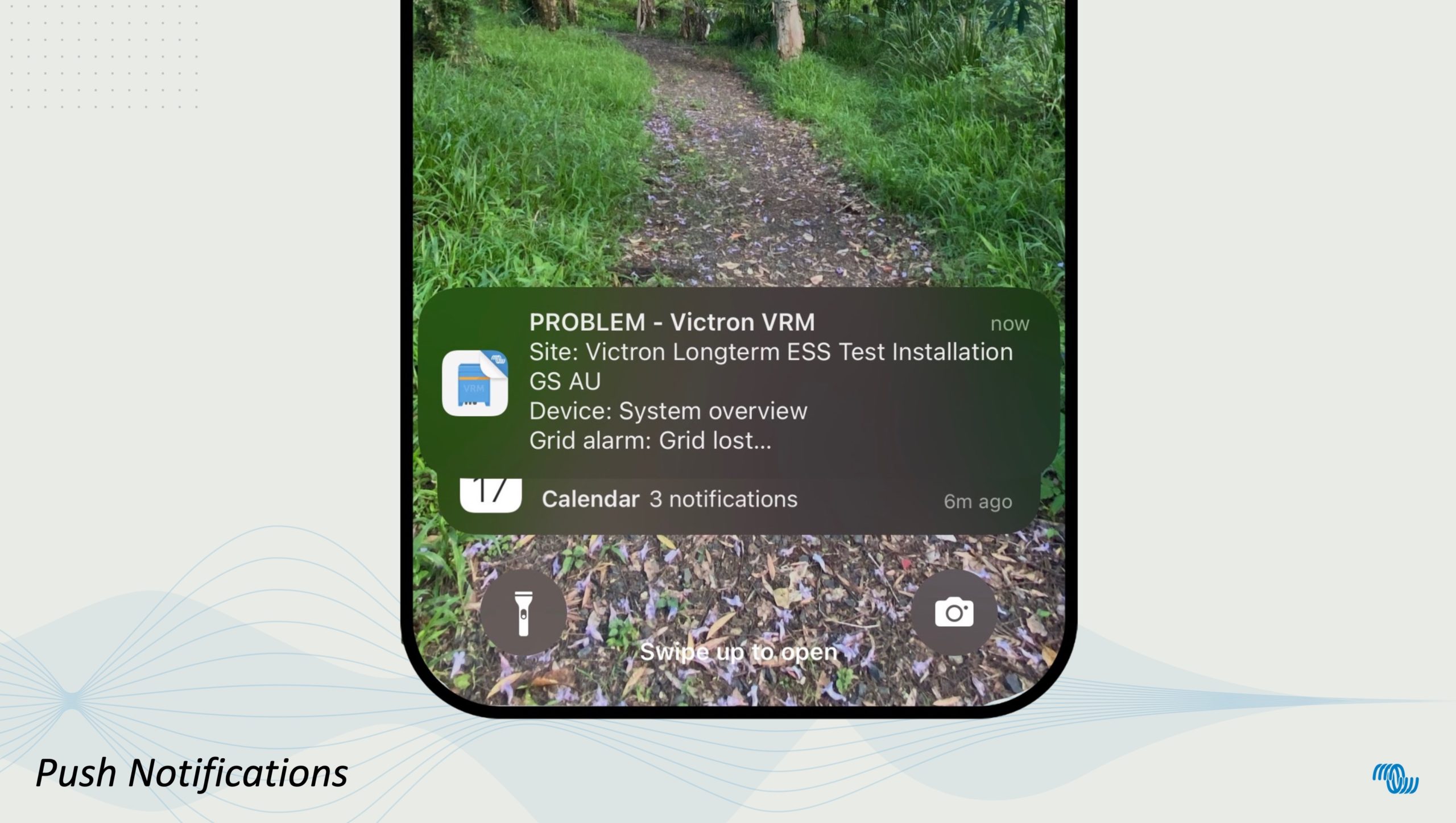
Remote alerts reach you wherever you are through email, SMS, push notifications, or even automated phone calls.
Each manufacturer has its own philosophy. Garmin OnDeck sends alerts through the ActiveCaptain app via email and SMS, while also using an anti-spam system that groups notifications every six hours to avoid overwhelming your phone.
Maretron takes onboard alerting further with its 105 dB ALM100 sirens and 32 different alarm patterns that help distinguish between various events. It also offers the SMS100 module for cellular messaging.
Siren Marine and Vanemar add automated phone calls, ensuring that critical alerts can wake you up even if notifications are muted.
Victron VRM organizes alerts into four categories: communication loss, automatic alarms, geofence alerts, and custom alarms. It also allows configurable thresholds and includes anti-spam protection limited to 50 messages per day.
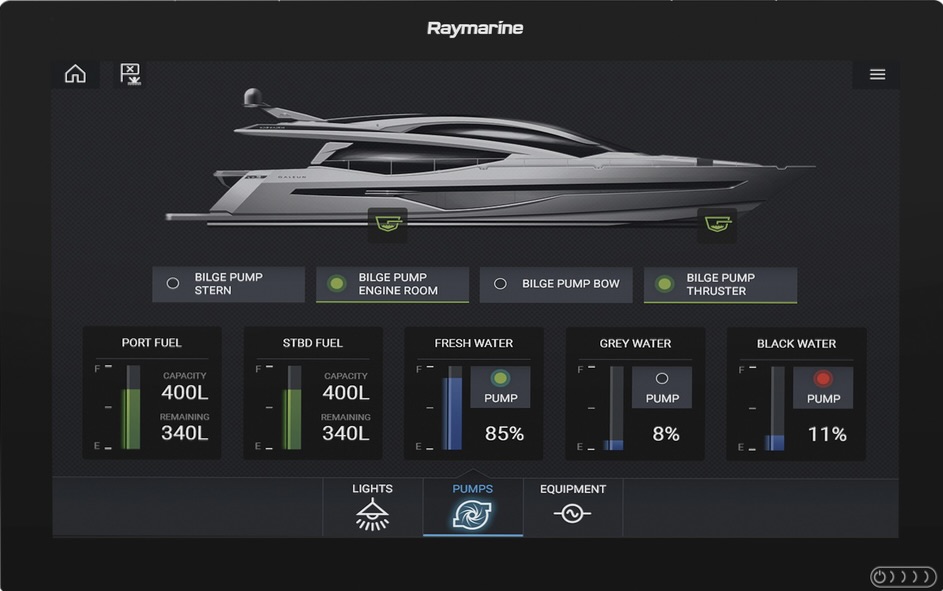
The most advanced monitoring solutions do more than observe—they allow you to take action.
You can start the heating system before arriving at the boat, switch off lights that were accidentally left on after a cruise, or start the generator to recharge the batteries.
Raymarine YachtSense, Mastervolt/CZone, Garmin EmpirBus, Energy Solutions' new SmartSwitch DC4, and Shelly switches compatible with Victron all support remote circuit control through a smartphone app. This functionality is generally referred to as digital switching.
Two major categories of monitoring systems :
These systems are not added onto the boat—they are built into the boat's electrical and control infrastructure from the start. Monitoring is possible because they already manage the onboard equipment.
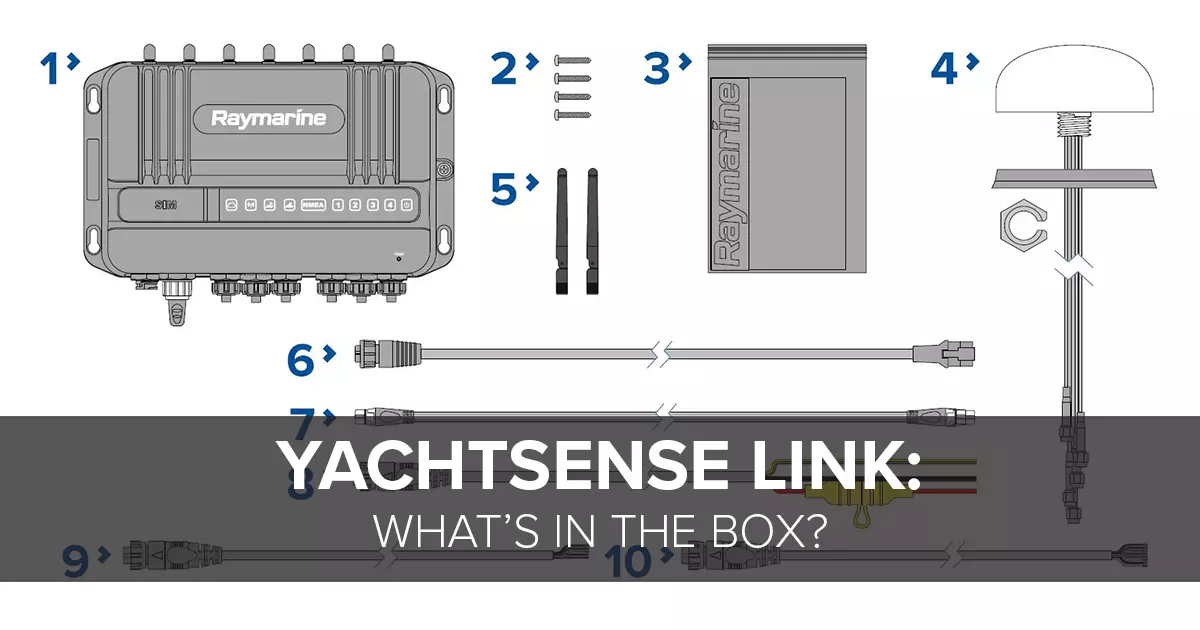
These systems are designed to work on virtually any boat, regardless of the brands of equipment already installed. They are often the easiest option for older boats or existing installations.
It also includes AI-powered sailing assistance features, particularly for sail trim optimization.
Quick overview


If your boat is already equipped with Victron products—which is increasingly common on modern solar and lithium-powered installations—the monitoring question becomes much simpler. Here's why this combination has become the reference choice for many boat owners.
Everything comes from the equipment itself, not additional sensors
The strength of the Cerbo GX lies in its ability to communicate directly with Victron devices.
The shunt provides the true state of charge (SoC), the MPPT controller reports solar production, the inverter shares AC and DC load information, and the BMS provides detailed battery cell data.The system also speaks other languages. It can integrate information from third-party equipment through CAN Bus, BMS-Can, and NMEA 2000 networks, allowing you to centralize data from multiple manufacturers in a single interface.
VRM stores years of operational data.
In practice, this allows you to detect whether a battery cell is beginning to deteriorate, whether a solar panel is gradually losing efficiency, or whether your bilge pump is running more frequently than it used to.
For attentive boat owners, this historical record becomes an invaluable source of information.
For installers and boatyards, it also enables remote diagnostics and support without requiring a visit to the boat.

In summary : If you're starting from scratch or completely redesigning your electrical installation, begin by looking at the equipment already onboard.
If you already have a Victron ecosystem in place, the Cerbo GX + GX LTE 4G + VRM combination is probably one of the best balances of functionality, flexibility, and value currently available.
If you prefer to stay within the Raymarine ecosystem, Maretron N2KView provides extensive access to NMEA 2000 data and can export it through gateways accessible from dedicated applications.
If your installation is older or based on another brand and you're simply looking for an effective safety net, a dedicated monitoring unit such as Vanemar, Siren Marine, Yacht Sentinel, or NjordLINK will provide the essentials: battery status, water ingress alerts, position tracking, and notifications, often with only a few hours of installation work.
Whatever solution you choose, there is undeniable comfort in being able to keep an eye on a boat that may spend long periods unattended.
Peace of mind is priceless, and today's equipment often costs far less than the consequences of the major problem it might help you avoid.
That said, this peace of mind comes with another cost—an intellectual one, but a very real one nonetheless.
With a constant flow of data at your fingertips, you'll inevitably discover small issues that previously went unnoticed and that, in many cases, would never have led to any real consequences other than a bit of stress.
And be careful not to become addicted to checking your monitoring dashboards. That's not the goal—but you'll quickly discover that it's easier said than done.
