Have satellite phones finally buried the crackling VHF radio?
Not necessarily, because modern VHF radios are a far cry from the devices of yesteryear and have integrated advanced features, the first of which was the arrival of GPS.
What are these features, and which fixed or handheld devices allow you to take advantage of them?
That is the subject of this article.
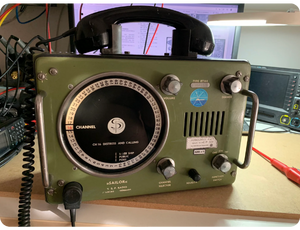
Modern marine VHF radios systematically include a 66-channel GPS receiver that allows for the automatic transmission of location data during DSC distress calls.
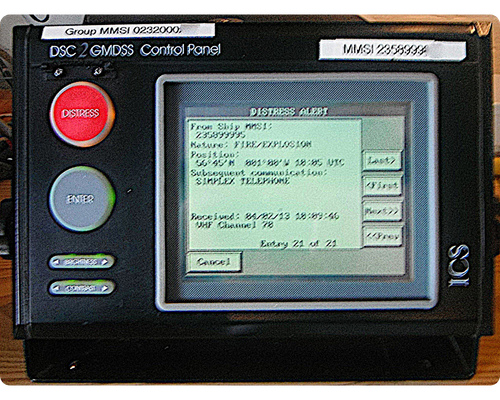
DSC, or Digital Selective Calling, is a feature that allows for the automatic transmission of distress messages and other safety alerts using specific VHF frequencies.
The feature also allows you to contact a boat directly using its MMSI. In practice, you can enter the recipient's number on the DSC device or, more simply, select an AIS "target" and trigger the call, which will be routed on a specific frequency.
DSC uses a digital system to transmit these messages, including information such as the vessel's MMSI number and GPS coordinates.
DSC has been mandatory since 2018 for new equipment installed on recreational vessels.
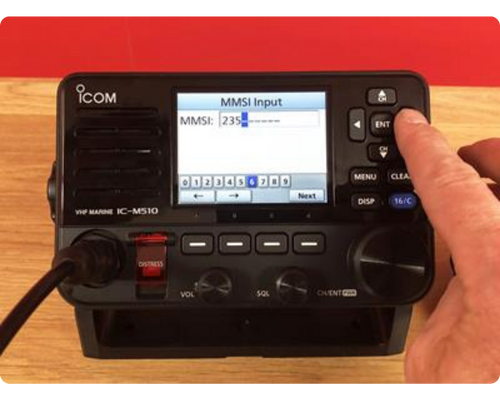
Programming the MMSI (Maritime Mobile Service Identity) is now simplified with user-friendly interfaces. The MMSI allows safety services to reliably identify the vessel.
Some handheld VHF radios, when equipped with DSC, also have an MMSI.
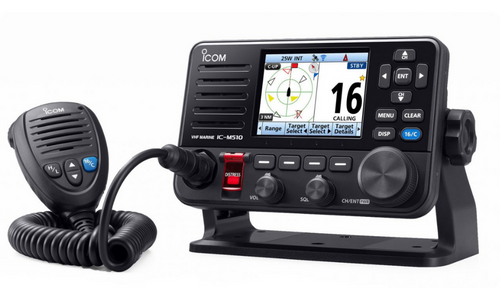
AIS (Automatic Identification System) is a system for identifying and announcing the routes of vessels. Large ships and recreational vessels that choose to do so can broadcast their AIS data via an AIS transponder.
AIS-compatible VHF radios can track the position of nearby vessels equipped with AIS transmitters without any additional special equipment.
These positions can be displayed on their multifunction screens.
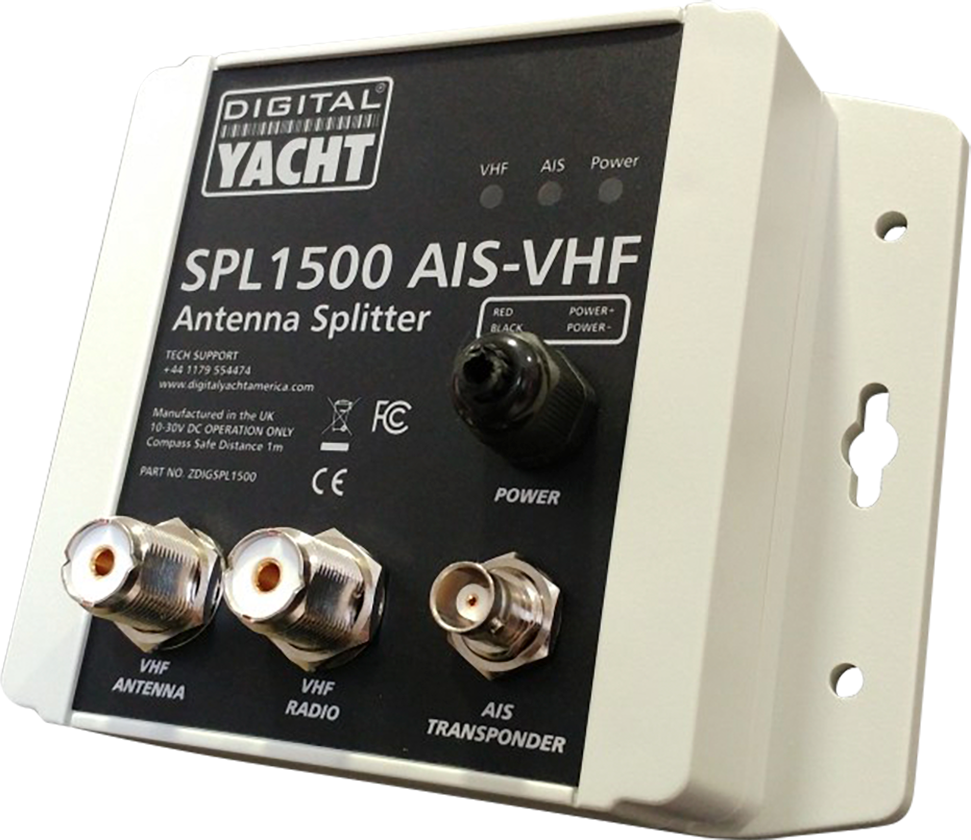
This accessory allows for the simultaneous reception of VHF and AIS signals using a single antenna, simplifying installation.

WiFi and mobile connectivity allow for remote monitoring and control of onboard systems, with the main unit acting as a gateway.
This revolutionary feature turns the VHF into a true control center for onboard equipment, accessible locally or remotely from a connected device.
The Vesper Cortex VHF allows you to create a boat monitoring system very similar to dedicated systems.
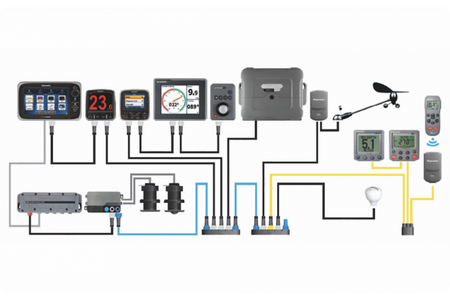
NMEA 2000 integration (with continued compatibility for older NMEA 0183 networks) allows you to receive and display all information circulating on the onboard network: GPS data, wind information, navigation parameters, and more. You can view them on the radio, just like on a small portable screen.
Modern VHF radios are capable of automatically receiving coastal and special weather reports. These important messages warn boaters of dangerous weather conditions.
Automatic weather monitoring alerts you when a report is broadcast.
Notices to Mariners (NTM) alerts are also received automatically.
These notices inform navigators of localized dangers and other navigation restrictions.
Advanced Audio Processing and Noise Reduction
Squelch is the unbearable background noise caused by atmospheric activity and artificial sources.
Active squelch control significantly reduces background noise.
High-end VHF radios feature powerful amplifiers (up to 85 dBA) that ensure communication quality even in noisy environments.
Some models also offer voice recording functions that allow you to save up to 60 seconds of communication—a handy feature for saving a weather report in a foreign language!
Dual and triple watch (DW/TRIW) modes allow you to monitor multiple channels simultaneously.
In dual watch mode, the VHF radio alternates between the selected channel—used to contact a friend's boat or a port—and channel 16, while triple watch mode adds a third programmable channel.
When the weather alert is activated, the weather channel is automatically checked every 4 seconds.
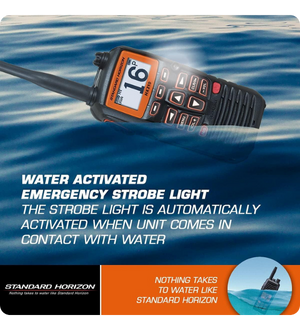
Modern handheld VHF radios feature powerful multi-colored LED flashlights (red and white) with various operating modes: steady light, fast flash, and slow flash (SOS).
At night, while on watch, a handheld VHF is a useful tool.
New 4-Digit Channels
Starting in 2028, all fixed VHF radios installed on SOLAS vessels (commercial ships) must support the display of new 4-digit channels.
This new channel numbering system aims to reduce VHF band congestion and promote direct, interference-free communication.

The industry is currently exploring the integration of satellite technologies to extend VHF coverage beyond short-range limits. This involves transmitting the signal to a satellite to increase its range. This is Space-Based VHF communication, a promising technology for both aviation and maritime use.
IoT (Internet of Things) technologies are also beginning to be integrated into professional VHF systems, enabling sensor data transmission and remote vessel monitoring. This is a feature offered by the Garmin Vesper Cortex, which we will describe below.

The Vesper Cortex VHF is a highly advanced VHF radio (and not cheap, approx. €2,500), but it is a very polished product.
Originally designed by a New Zealand company, Vesper was acquired by Garmin, who clearly recognized the device's impressive performance!
This radio features a built-in AIS transponder. Your GPS position is transmitted via AIS, making you visible day and night.
The Vesper Cortex also includes an internal Wi-Fi router and NMEA connectivity. Combined with a Wi-Fi connection at the marina, these two features make it a very compelling remote monitoring system.
The device consists of a central unit (without a screen) and handsets, either fixed or mobile. Why fixed? Because you won't find it with a dead battery when you need it most. The Vesper Cortex fixed handsets are 12V or 24V powered devices connected to the NMEA 2000 network, through which they communicate with the central unit. The handsets have a speaker that allows you to monitor channel 16 directly from the handset. Install a fixed one in your cockpit, and your passengers won't be woken up by the saloon VHF set to maximum volume just so the skipper can hear it!
Its Wi-Fi router also allows you to turn a mobile phone connected to the onboard network into an additional handset.

Finally, regarding squelch, Vesper Cortex offers a filter that significantly limits those unpleasant interferences. To alert others, its 85 dB amplifier is powerful enough to warn another boat at a distance, either by voice or with a pre-determined sound (horn)!
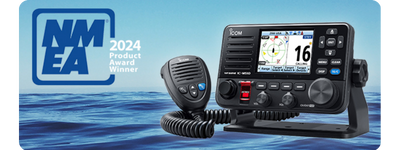
This VHF operates similarly to the Vesper. It creates a local network that can connect to 3 wired handsets as well as three smartphones.
It features the traditional look of a standard VHF, but is equipped with a (very) nice color screen. With an IP68 waterproof rating, it is a robust device.
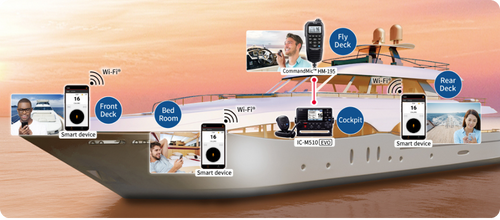
The 2-way communication functions, similar to walkie-talkies, are quite practical for talking while at anchor or even during port maneuvers.
The ICOM 510 EVO has an AIS transponder, NMEA 2000 connectivity, and its screen acts as a small secondary MFD display. That’s a nice touch.
The sound and interference filtering have been highly refined to ensure loud and clear audio in all circumstances.
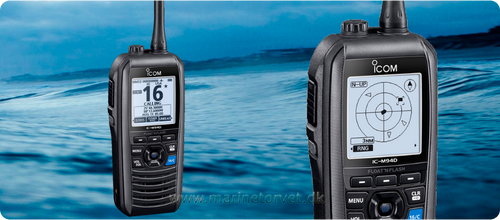
As the first handheld VHF on the market to integrate an AIS receiver, this feature makes it a perfect VHF for night watch.
Naturally equipped with GPS and DSC functions, the ICOM IC-M94 features a color screen to display targets and facilitate direct ship-to-ship communication via DSC.
Very powerful (6 W) for a handheld VHF, its range is extended.
It also features a very powerful speaker.
Waterproof (IP67), if it falls into the water (MOB), the screen and buttons will start flashing to aid in recovery, and a simple press of a button will trigger an AIS MOB alert visible to all vessels within radio range.
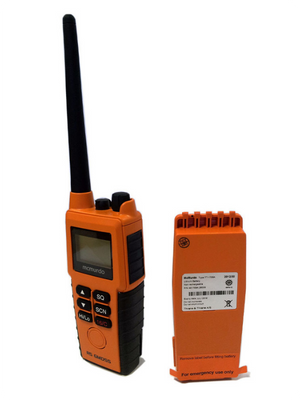
McMurdo is a Sea of Solutions brand renowned for its beacons.
So when the brand puts its name on a handheld VHF radio, it’s not messing around.
It is SOLAS IMO and GMDSS certified, meaning it can be used as mandatory equipment on SOLAS vessels and their life rafts.
It is a very rugged device, waterproof to 50m, and equipped with a high-capacity battery.
It can monitor three channels simultaneously.
It comes with a rechargeable battery and an additional emergency battery with a 6-year shelf life guarantee.
